-
Get Free Consulting: 08048250178
-
Shop No 5, Dev Siddhi Apt, Opp Hypercity Mall, Kasarvadavli, Ghodbunder Road, Thane West

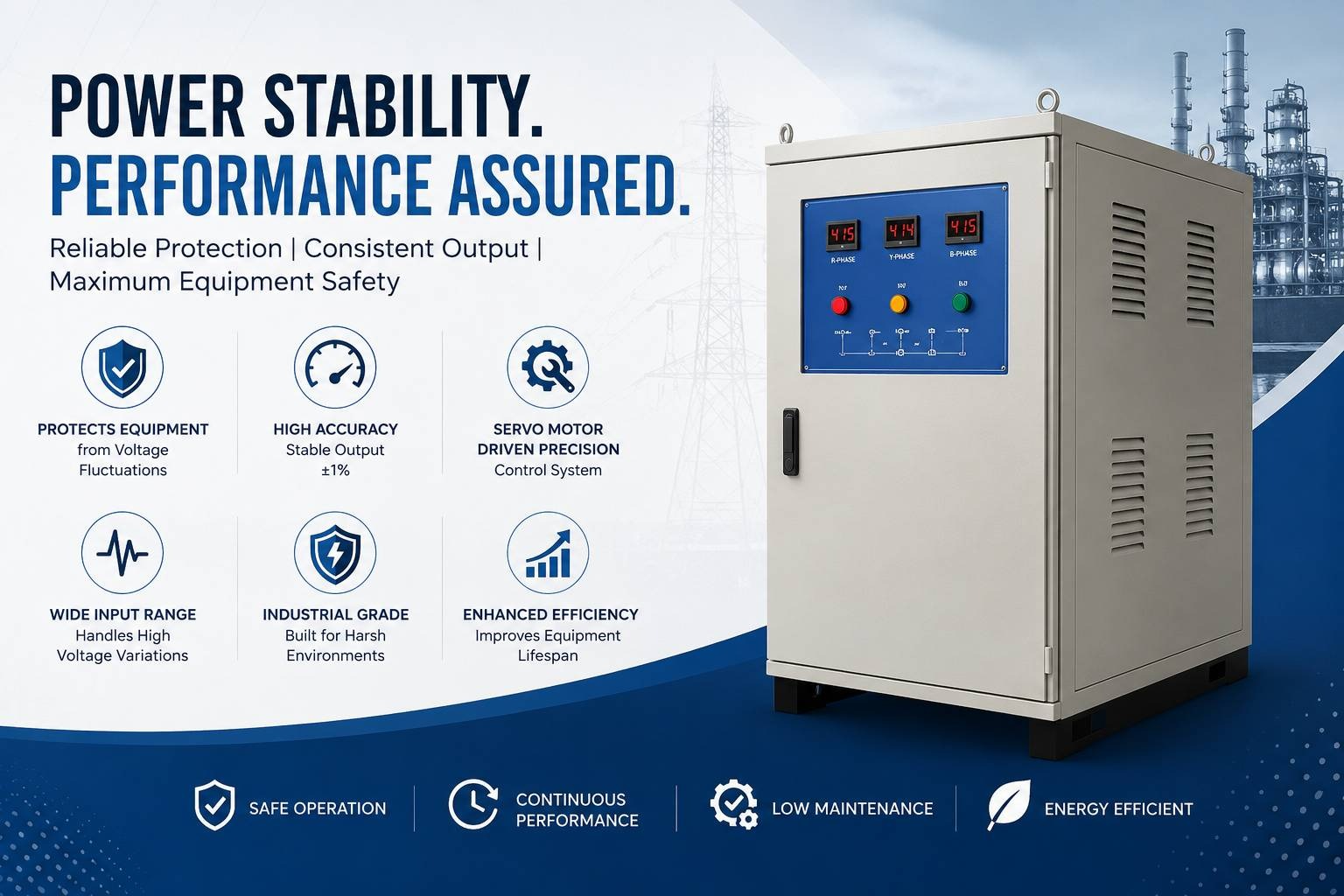
If your factory, hospital, data center, or commercial facility has ever lost equipment to a sudden voltage spike or a slow, silent drop in supply voltage, you already know how expensive unstable power can be. A three phase servo controlled voltage stabilizer is the equipment most Indian industries rely on to solve this problem permanently.
We've been manufacturing and supplying power solutions out of Thane, Maharashtra since 1998, and in that time we've seen the same pattern again and again: businesses only think about voltage stabilization after a motor burns out or a production line goes down. This guide is written to help you understand the technology before that happens — not after.
By the end of this article, you'll know exactly what a three phase servo controlled voltage stabilizer is, how it works, where it's used, what to look for before buying one, and how to avoid the common mistakes that lead to premature failure.
What Is a Three Phase Servo Controlled Voltage Stabilizer ?
A three phase servo controlled voltage stabilizer in Thane is an electrical device that automatically corrects fluctuating input voltage and delivers a stable, regulated output — typically 220V (±1%) per phase — to protect connected machinery. It uses a servo motor to physically adjust a variac (variable transformer) in real time, correcting voltage variations within milliseconds.
Unlike static stabilizers, which switch between fixed voltage taps, a servo voltage stabilizer provides continuous, stepless correction. This makes it far more accurate — which is exactly why it's the preferred choice for industrial and commercial power protection.
How Does a Servo Stabilizer Actually Work ?
Here's the short version, step by step :
- Sensing - The stabilizer continuously monitors incoming voltage across all three phases.
- Comparison - A control circuit compares the incoming voltage to the required output voltage.
- Correction - If there's a deviation, the servo motor rotates a variable transformer (buck-boost transformer) to raise or lower the voltage.
- Stabilization - The corrected, stable voltage is delivered to your equipment — continuously, in real time.
This closed-loop feedback mechanism is what separates a true industrial servo voltage stabilizer from cheaper, less accurate alternatives.
Why Voltage Fluctuation Is a Bigger Problem Than Most Businesses Realize ?
Most facility owners underestimate voltage instability because the damage is often gradual, not instant. Over time, unstable voltage :
Shortens the lifespan of motors, compressors,
and transformers
Causes overheating, which increases
fire risk
Damages sensitive electronics in servers, medical equipment, and control panels
Increases energy consumption, since equipment works
harder to compensate
Leads to unplanned downtime, which is often more costly than the
stabilizer
itself.
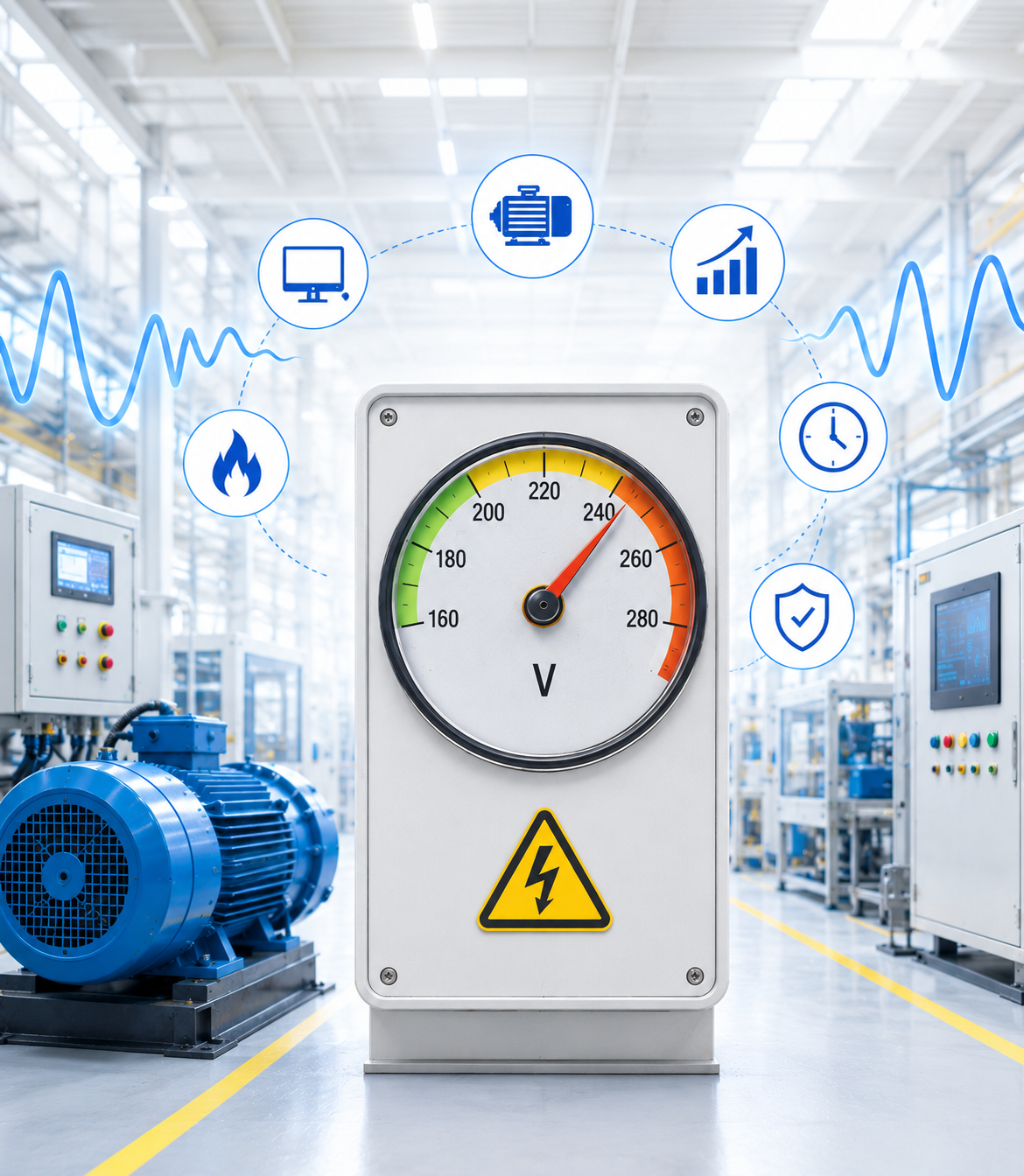
In our experience, industries that operate heavy machinery, CNC equipment, or precision instruments are the most vulnerable — and the ones that benefit the most from installing a three phase automatic voltage stabilizer.
Key Features to Look For in a Three Phase Servo Voltage Stabilizer
Not all stabilizers are built the same. Based on our experience designing and supplying these systems since 1998, here's what actually matters :
| Feature | Why It Matters |
|---|---|
|
High Precision Voltage Regulation
|
Keeps output steady at 220V ±1%, minimizing equipment stress |
|
Advanced Servo Mechanism
|
Reacts instantly to voltage changes for seamless correction |
|
Overload & Short Circuit Protection
|
Prevents damage during electrical faults |
|
Air-Cooled Design
|
Improves reliability and reduces maintenance |
|
High/Low Voltage Cut-Off
|
Automatically disconnects supply during dangerous fluctuations |
|
Single-Phase Prevention & Reversal Protection
|
Protects three-phase motors from phase failure damage |
|
In-Built Bypass System
|
Keeps power flowing even during servicing |
|
Alarm System
|
Alerts operators to abnormal conditions instantly |
Voltage rating typically ranges from 5 KVA to 500 KVA for three-phase systems, with input voltage ranges of 310V–470V, 340V–470V, or 360V–480V depending on your local grid conditions. Since stabilizers are essentially customized equipment, the right specification depends on your exact input voltage and load requirements.
Applications : Where Is an Industrial Servo Voltage Stabilizer Used ?
A three phase servo controlled voltage stabilizer is used wherever consistent power quality is non-negotiable :
1. Industrial Manufacturing
Factories running CNC machines, injection molding units, and heavy motors need constant voltage to avoid production downtime and equipment wear.
2. Commercial Establishments
Malls, office complexes, and commercial buildings depend on stable power to keep HVAC systems, lighting, and elevators running safely.
3. Medical Equipment
Hospitals and diagnostic labs use extremely sensitive machines. Even minor voltage variation can damage imaging or lab equipment — making a servo voltage stabilizer essential.
4. Data Centers & IT Infrastructure
Servers and networking hardware are highly sensitive to power quality. A stable three-phase supply protects both the hardware and the data running on it.
Benefits of Installing a Three Phase Servo Controlled Voltage Stabilizer
- ● Prevents electrical damage to machinery and appliances
- ● Reduces energy consumption through efficient voltage control
- ● Extends equipment lifespan by eliminating voltage-related stress
- ● Ensures uninterrupted operation of critical applications
- ● Responds instantly to voltage fluctuations, protecting equipment in real time
These benefits compound over time. A facility that installs a properly rated stabilizer typically sees fewer equipment breakdowns, lower maintenance costs, and better energy efficiency within the first year.
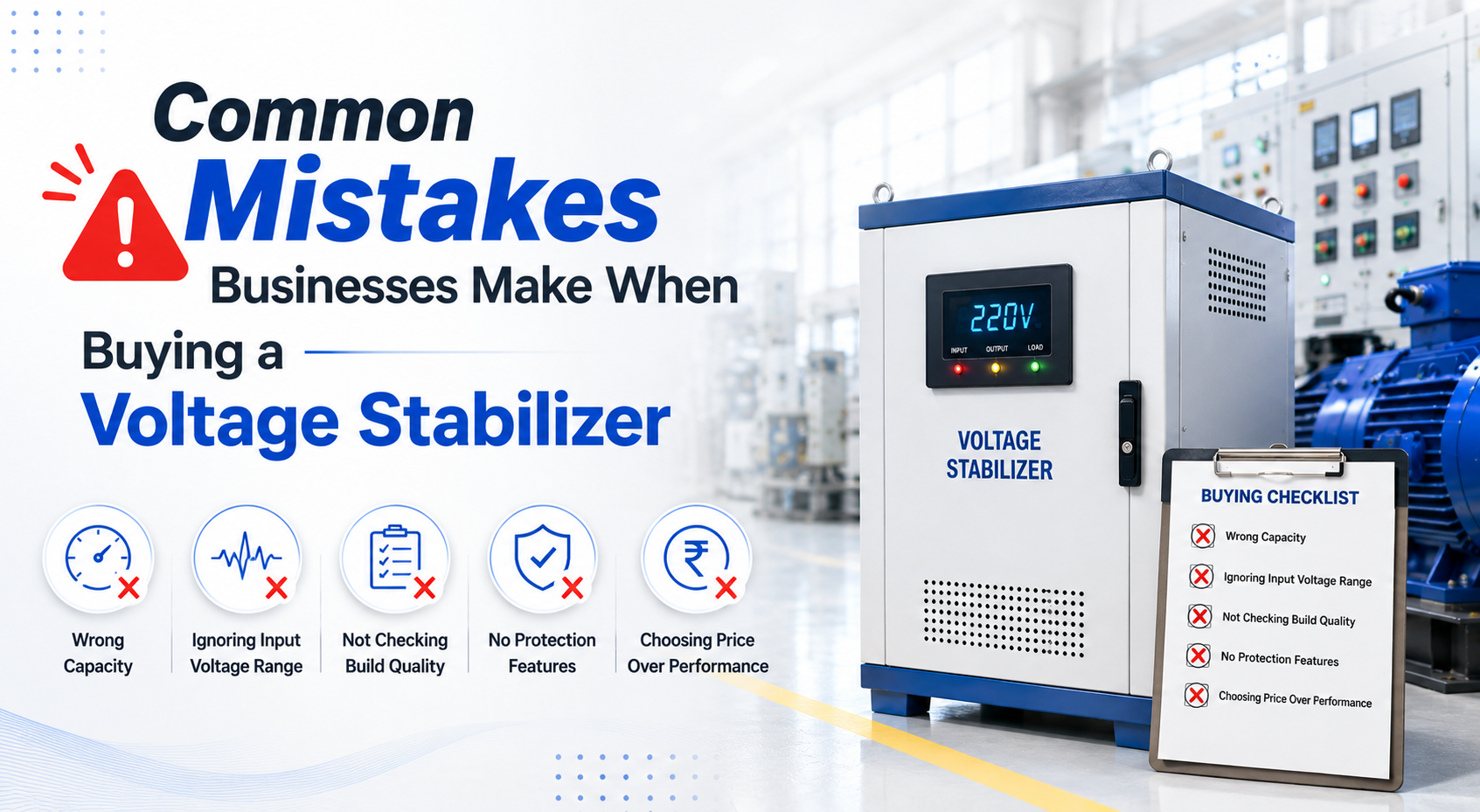
Common Mistakes Businesses Make When Buying a Voltage Stabilizer
After years of supplying these systems, we consistently see the same avoidable mistakes :
- ● Undersizing the KVA rating - buying based on current load only, without accounting for future expansion
- ● Ignoring the input voltage range - installing a stabilizer not rated for their actual grid conditions, which causes premature correction failure
- ● Skipping maintenance checks - even a servo stabilizer needs periodic inspection of the carbon brush and servo motor
- ● Choosing based on price alone - cheaper stabilizers often lack proper overload and short-circuit protection
Our recommendation: always share your exact input voltage range, connected load, and future expansion plans with your supplier before finalizing specifications. A three phase servo stabilizer is a long-term investment, and getting the sizing right the first time saves significant cost later.
Three Phase Servo Voltage Stabilizer vs. Static Voltage Stabilizer
| Parameter | Servo Voltage Stabilizer | Static Voltage Stabilizer |
|---|---|---|
|
Correction Method
|
Continuous, stepless | Step/tap switching |
|
Accuracy
|
High (±1%) | Moderate |
|
Response Time
|
Fast, real-time | Slightly slower |
|
Best For
|
Industrial, heavy-duty loads | Light commercial, residential |
|
Maintenance
|
Periodic servo/brush check | Minimal |
If your facility runs heavy three-phase machinery, a servo controlled voltage stabilizer is almost always the better long-term choice over a static unit.
Why Choose AG Power Systems ?
We've been engineering power solutions from Thane, Maharashtra since 1998 — supplying batteries, servo stabilizers, static stabilizers, isolation transformers, UPS systems, and inverters to industries across the region. Every three phase servo controlled voltage stabilizer we supply is built to match the customer's actual input voltage conditions rather than a generic, one-size-fits-all spec.
Our stabilizers come with :
- ● Surge and spike suppression
- ● Single-phase prevention and reversal protection
- ● High/low power auto cut-off
- ● In-built bypass systems
- ● Alarm systems for abnormal conditions
- ● Customization based on your specific input voltage requirement
With nearly three decades in the power solutions industry, our engineering team focuses on precision, durability, and dependable after-sales support — the three things that matter most when your equipment's safety is on the line.
Conclusion
A three phase servo controlled voltage stabilizer isn't just an electrical accessory — it's a safeguard for every motor, machine, and sensitive device connected to your power supply. Whether you're running a factory floor, a hospital, or a data center, stable voltage directly protects your bottom line by reducing downtime, energy waste, and equipment failure.
If you're evaluating a three phase automatic voltage stabilizer for your facility in Thane or across Maharashtra, our team can help you choose the right KVA rating and input voltage range for your specific setup.
Frequently Asked Questions
It's a power protection device that uses a servo motor to continuously correct three-phase voltage fluctuations, delivering a stable output (typically 220V ±1% per phase) to protect connected equipment.
It uses a closed-loop system: a sensor detects voltage deviation, a control circuit calculates the correction needed, and a servo motor adjusts a variable transformer in real time to restore stable output.
Three phase servo stabilizers are typically available from 5 KVA to 500 KVA, with input voltage ranges of 310V–470V, 340V–470V, or 360V–480V, depending on the local grid and load requirements.
For industrial and heavy-load applications, yes. Servo stabilizers offer continuous, stepless correction and higher accuracy, while static stabilizers use tap-switching and suit lighter commercial or residential loads.
Common applications include manufacturing plants, commercial buildings, hospitals and medical equipment, and data centers or IT infrastructure — anywhere consistent, precise voltage is critical.
Share your exact input voltage range, connected load (in KVA), and any planned future expansion with your supplier. Since servo stabilizers are customized equipment, correct sizing upfront prevents performance issues later.